Category Archives: Blog
Yet another inferno
Many from the R world will know The R Inferno. Abstract: If you are using R and you think you’re in hell, this is a map for you. A newly minted inferno is The 9 circles of scientific hell. Most amusing to me is Circle 4: p-value fishing, the punishment of which is brilliant. As … Continue reading
Posted in R language, Statistics
Leave a comment
Were stock returns really better in 2007 than 2008?
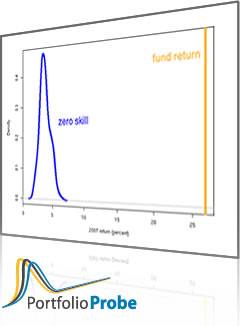
We know that the S&P 500 was up a little in 2007 and down a lot in 2008. So on the surface the question seems really stupid. But randomness played a part. Let’s have a go at deciding how much of a part. Figure 1: Comparison of 2007 and 2008 for the S&P 500. Statistical … Continue reading
Review of “Obliquity” by John Kay and “Drive” by Daniel Pink
How could a book about indirectly solving problems and one about human motivation be saying the same thing? Obliquity Chapter 1 (and more) is about happiness. We’ve been here before — with a review of The Happiness Equation. Unlike The Happiness Equation, this book gives us some real insight into happiness. Kay divides happiness into … Continue reading
Primitive stock markets
There are two types of technology: Good (does exactly as wanted, with no hassle) Primitive (all the rest) This classification has been instilled into me by my wife. The stock market is primitive. Unbroken history Current stock markets are not much different than when the New York Stock Exchange was the shade of a buttonwood … Continue reading
R is a name you need to know
As if that is news to some of you. Forbes has a Mean Business blog post by Steve McNally titled “Names You Need to Know in 2011: R Data Analysis Software”. The post includes several links to why R is wonderful. It also includes a pretty — but seemingly useless — statistical graph. Correct me … Continue reading
Posted in R language, Statistics
3 Comments
The ARORA guessing game
The game ARORA (A random or real array) is a website that gives you two time series at a time. Your job is to guess which series is real market data and which is permuted data. It’s fun — try it. With some practice you will probably be able to guess which is which well … Continue reading
Posted in Fund management in general, R language
Tagged ARORA, financial Turing test, technical analysis
Leave a comment
Backtesting — almost wordless
On Tuesday I gave a talk at the Thalesians entitled “Effective backtesting”. You can get the annotated slides but below is an almost wordless introduction to backtesting. Introduction Figure 1. When you backtest, you attempt to see how an investment strategy would have worked during some historical period of time. We can think of backtesting … Continue reading
Posted in almost wordless, Quant finance, Random portfolios
Tagged backtesting, outperformance
5 Comments
Are momentum strategies antisocial?
We’ll get to “antisocial” via a look at a chapter in The Future of Finance from the London School of Economics. The chapter in question is “Why are financial markets so inefficient and exploitative?” by Paul Woolley. There are many things in this chapter with which I agree. There is roughly an equal number of … Continue reading
Posted in Fund management in general
Tagged active fund management, momentum, tracking error
2 Comments
xkcd on market efficiency
This arrives via Marginal Revolution. But note that there is a check mark missing: Psychic fund management.
Posted in Fund management in general
Leave a comment
Backtesting talk, and other events
I will speak November 2 at the Thalesians on “Effective Backtesting”. Registration is now open. Abstract: Backtesting builds a bridge from the past to the future. These bridges are shaky and unstable. We’ll explore the ways they are likely to fall down. We’ll also show how random portfolios can strengthen the bridges. Details at http://www.thalesians.com/ … Continue reading